Hazara Food: A Guide to the Flavors Nobody Writes About
There is a culinary tradition that food writing has almost entirely ignored. Read a thousand words about the food of Afghanistan and you will come away with a reasonable picture of kabuli pulao, kebabs, and naan, and almost nothing about the food culture of the people who have lived for centuries in the central highlands. At elevations where wheat grows slowly, where dairy animals are more valuable than any other livestock, and where winter is long enough to make preservation a survival skill, a particular cuisine takes shape. Hazara cooking is particular in the way most mountain food is particular: shaped by what the land gives and what it withholds.
This is not a recipe guide. It is an attempt to describe a food culture, its ingredients, its flavors, its rhythms through the year, and what makes it distinctly Hazara rather than simply a footnote in the broader story of Afghan cooking. Food carries strong regional and family variation, and several dishes named here are shared, in close or related forms, with neighboring Persian, Mongol, and broader Central Asian traditions. Where origins are genuinely contested or shared, the article tries to say so.
The Land That Made the Food
Hazarajat, the homeland of the Hazara people, sits in the central highlands of Afghanistan, in and around the Kuh-e Baba mountains and the western reaches of the Hindu Kush. Early Persian geographies of the region describe it as essentially mountainous, with populations that lived by herding and farming. That description held for a long time.
What you grow at 2,500 meters is not what you grow in the Helmand valley. Wheat is the foundation, slow-growing autumn wheat in the south, faster spring wheat in the colder highland centers. Rice, the prestige grain of the rest of Afghanistan, is expensive to import and has historically been rare on the everyday Hazara table; it belongs to celebrations, not Tuesdays. The everyday protein came from sheep and goats, and above all from what could be made from their milk. Communities moved seasonally between highland summer pastures (yeilaq) and lowland winter pastures (qishlaq), carrying animals and the knowledge of how to transform their products into food that would last. That pastoral character is the single most important fact about Hazara cuisine.
Dairy at the Center: Qurut and Its Relatives
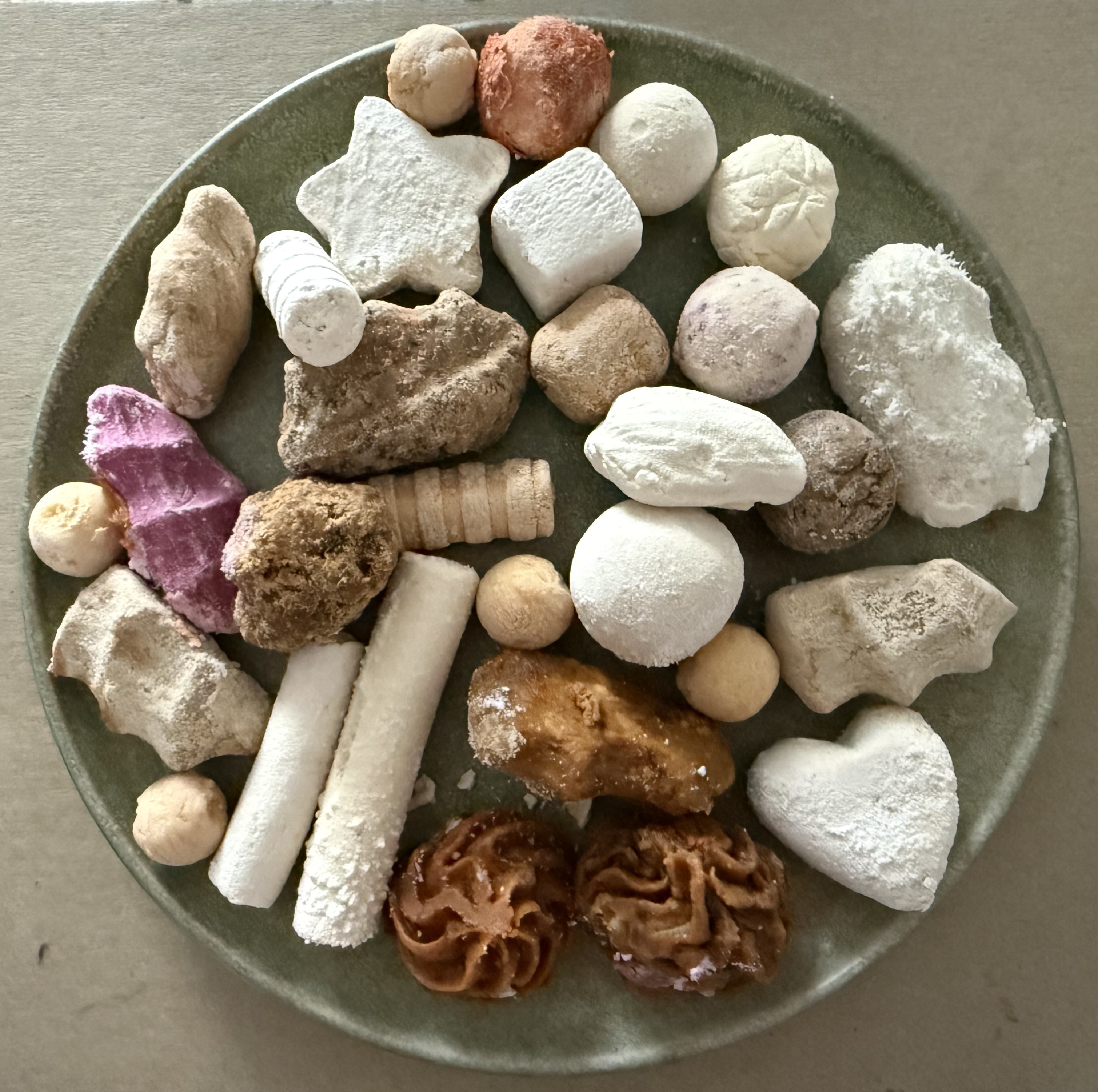
If there is one ingredient most distinctly associated with Hazara cooking, and most invisible to the outside world, it is qurut. Qurut is dried yogurt: hard, sour, dense little spheres made from the buttermilk left after churning butter. Milk goes into a goatskin sack hung from a tripod and swung until butter separates out. The remaining buttermilk is soured at room temperature for several days, boiled, drained, pressed, shaped by hand, and dried in the open air over weeks. What remains is shelf-stable, intensely sour, and extraordinarily concentrated.
Qurut solved the central problem of high-altitude pastoral life: what to do with a summer milk surplus when there is no refrigeration and a long winter ahead. A ball dissolved in water becomes a tart, protein-rich sauce or soup base. Crumbled over noodles or rice, it provides the tangy counterpoint that transforms a plain dish into something complex. It is light enough to carry on horseback, stable enough to last through winter, and it sits in a long history of steppe and highland dairy techniques that sustained pastoralists across Eurasia.
Qurut is closely related to kashk, the broader Central Asian dried dairy product found from Iran to Uzbekistan. It is not unique to Hazaras, but the Hazara use of it tends toward a dissolved, sauce-like application in everyday cooking rather than a garnish, and its centrality to the daily table is more pronounced than in many neighboring cuisines. Alongside it, Hazara dairy traditions include chaka (strained yogurt mixed with garlic), doogh (a thinned, salted yogurt drink), and the rich cream skimmed from morning milk that gets stirred into bread or tea.
Bread Every Day
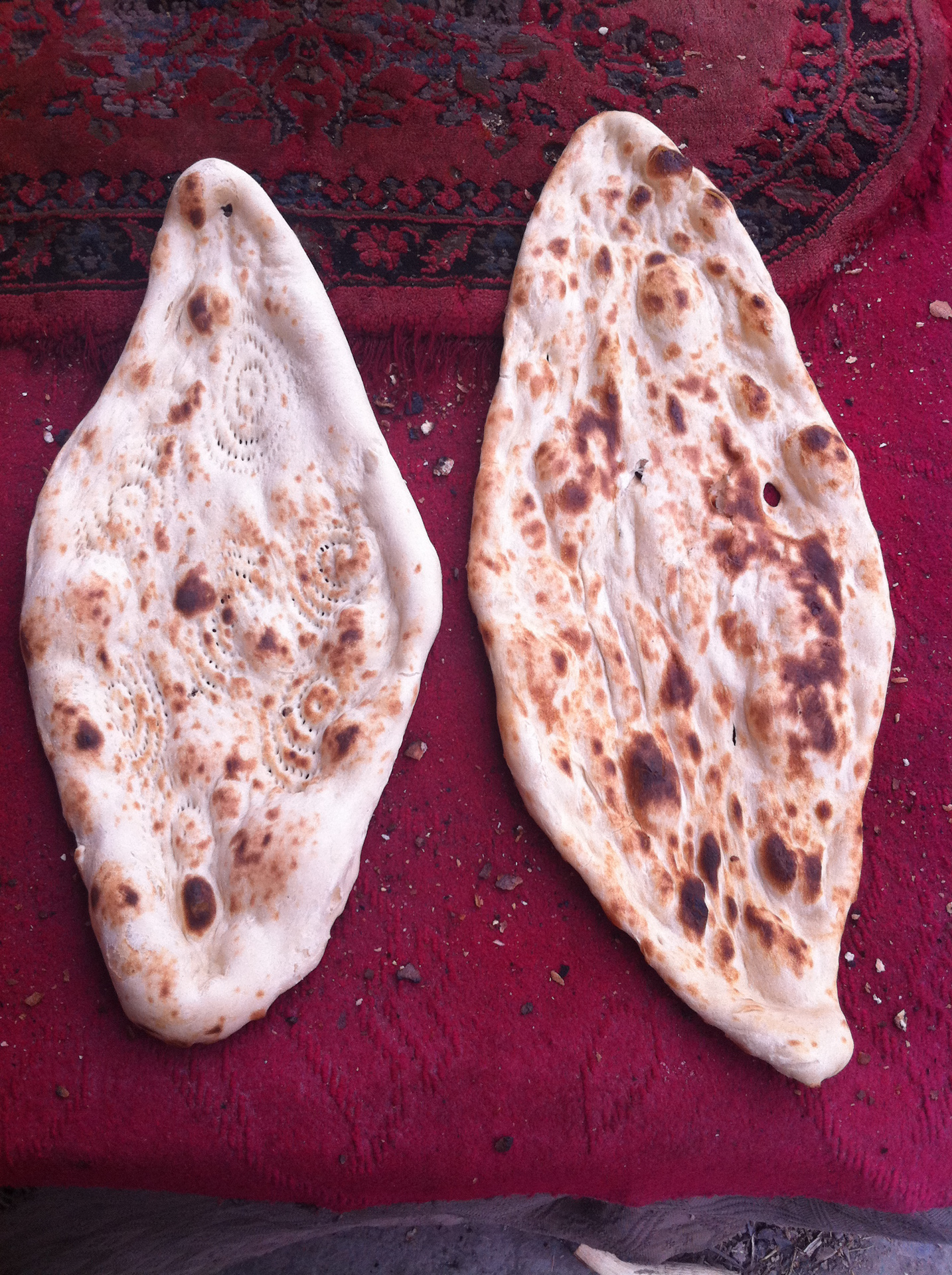
Bread is not a side dish in Hazara cooking. It is the meal. Three main forms appear: tawa bread, cooked on a flat iron griddle, thin, blistered, immediately edible; tandoor bread, slapped against the interior wall of a cylindrical clay oven sunk into the ground, emerging with a charred crust and chewy interior; and nan-buta, a thick brick-shaped loaf more common in the colder highland centers.
Dinner in a household without guests might be bread, yogurt, and tea. This is not poverty food. It is the baseline, the meal that requires no occasion. The bread is the plate.
The Dumpling Traditions: Mantu and Aushak
Two dishes appear constantly in any account of Hazara food, and both are dumplings, which tells you something about the culinary lineage. Mantu and aushak both arrive in Hazarajat from the broader Silk Road tradition of stuffed dough, and versions of both are eaten widely across Afghanistan and beyond. The Hazara renditions have their own specific character, and Hazara families often claim a particular fluency with these dishes, but neither is exclusively Hazaragi.
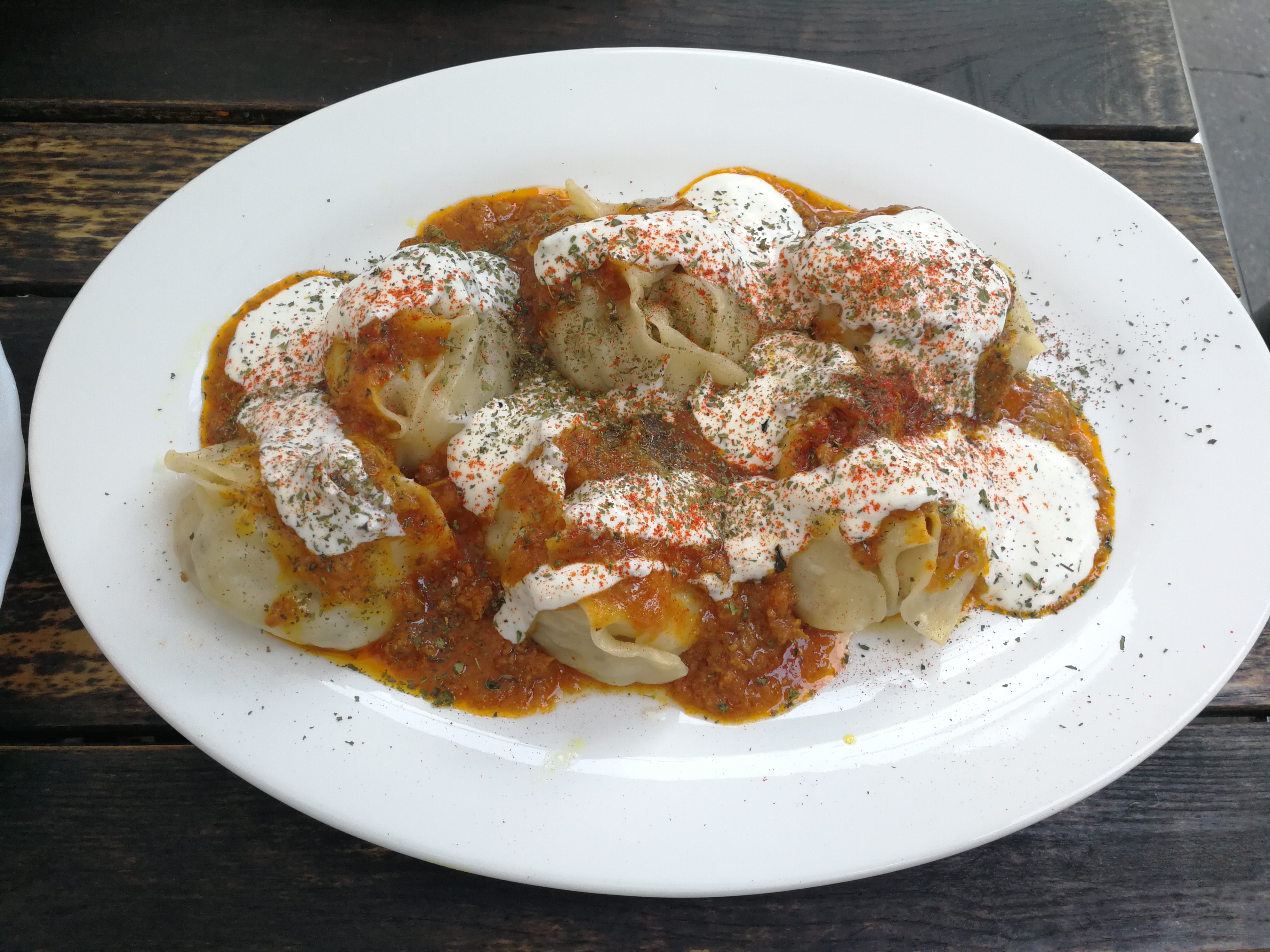
Mantu are steamed beef and onion dumplings, the ground filling heavily seasoned with cumin and black pepper, wrapped in thin pasta dough. They arrive at the table blanketed in two sauces: chaka (garlic-heavy strained yogurt) and a tomato-based meat sauce that sometimes includes split yellow peas or lentils. The combination of hot savory dumpling, cold creamy yogurt, and spiced sauce is one of the more carefully layered flavor experiences in the cuisine. Mantu are not a weeknight dish. They take hours and usually the hands of multiple people. The word traces to Mongol and Turkic origins, with relatives in manti (Turkish, Uzbek), mandu (Korean), and other forms across Eurasia, carried along the routes that connected the steppe to the settled empires.
Aushak is different in every way. Where mantu are rich and meaty, aushak are fresh and vegetal. The filling is gandana, a specific Afghan leek resembling a fat chive, sharper than Western leeks, mixed with scallions, salt, and pepper, wrapped in thinner dough and boiled rather than steamed. They land on the plate with the same garlicky yogurt as mantu, a tomato sauce alongside, and dried mint crumbled over everything. Outside Afghanistan, cooks substitute chives or scallions for gandana and the dish still works, though something specific is lost.
Everyday Dishes: Aash, Shorwa, and Dalda
Below the register of celebration food is the everyday cooking, and here the picture is more specifically highland. Three dishes define the daily table.
Aash is a noodle soup, but calling it that undersells it. A thick broth, sometimes meat-based, sometimes not, is built with kidney beans, chickpeas, and hand-pulled noodles. What makes it Hazaragi is the topping: qurut or fresh yogurt dissolved and drizzled across the surface, dried mint crumbled over that, a thread of chili oil for heat. The combination of hot soup and cold dairy is characteristic of the cuisine. In its plainest form, noodles, yogurt, mint, salt, it is the kind of dish that has been perfected by generations who knew exactly what they were doing.
Shorwa is the stew that covers most occasions when something more substantial is called for: bone-in lamb or beef with potatoes, tomatoes, onion, turmeric, and coriander, cooked low and slow until the meat falls apart and the broth thickens. Its virtue is in the bones and the time. It is served with bread, which does the work of absorbing everything.
Dalda is worth naming specifically because it rarely appears in any account of the cuisine: a thick porridge of crushed wheat, cooked until nearly gelatinous, finished with melted ghee and caramelized onions. The raw materials, wheat, fat, onion, are exactly what a highland farming household would have on hand at any time of year. Dense, savory, filling. Winter food made into something you would choose.
Celebration and Ceremony: Nowruz, Eid, and Weddings
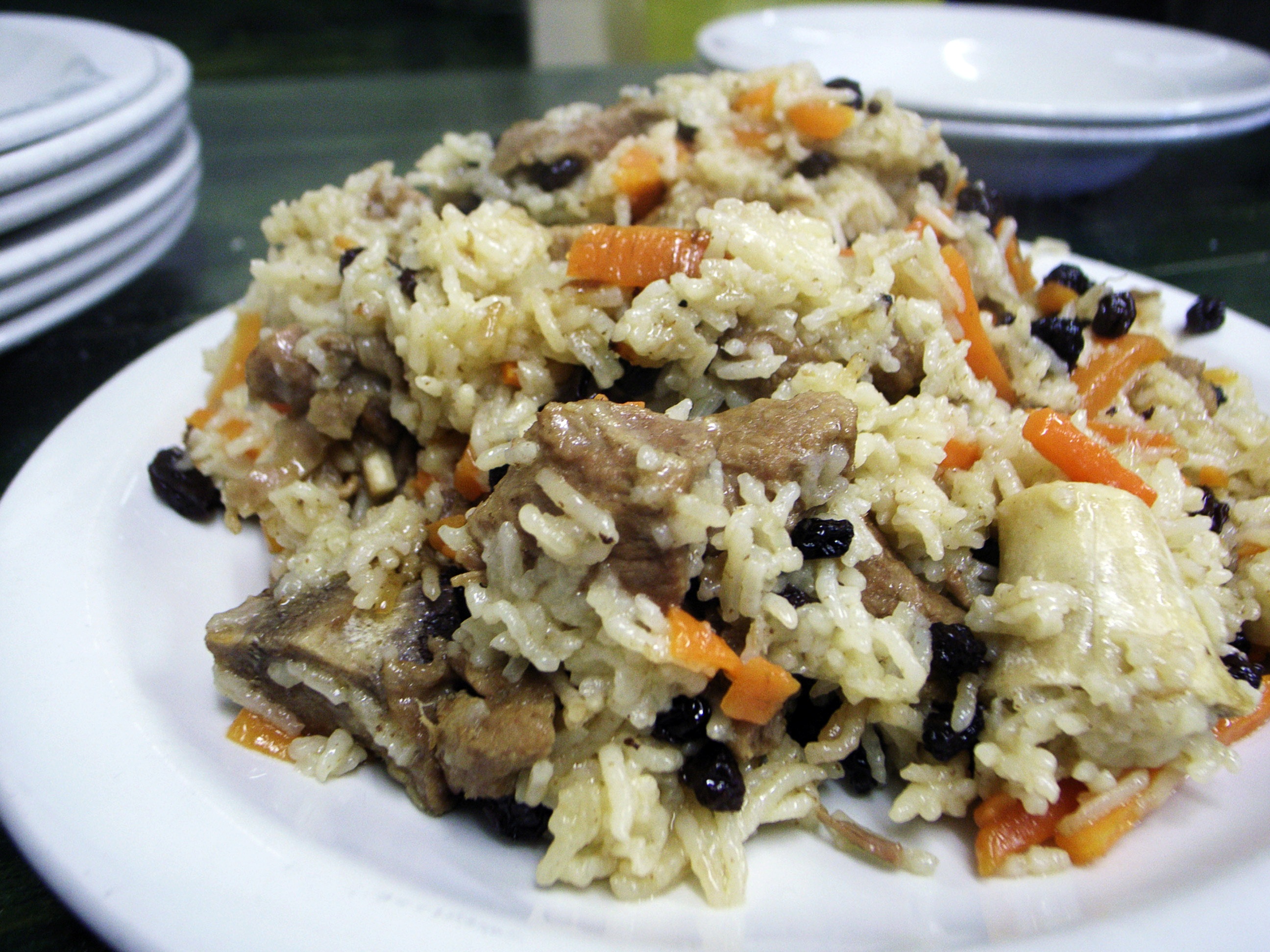
The distance between everyday cooking and celebration cooking in Hazara tradition is significant. Rice, which rarely appears on the daily table in rural Hazarajat, is central to festive cooking. Qabili palau, the fragrant rice dish made with basmati, slow-cooked lamb or chicken, caramelized carrots, raisins, and a blend of warming spices including cardamom and cumin, is the prestige dish of Afghan cooking broadly, and Hazara households cook it for guests, weddings, and celebrations. It is not a Hazara invention; it is the dish that says abundance, generosity, occasion across Afghan cuisine.
Nowruz, the new year at the spring equinox, carries its own food rituals, shared with Persian and broader Central Asian tradition but observed with their own emphasis in Hazara households. Haft mewa, meaning "seven fruits," is the ceremonial preparation: seven types of dried fruits and nuts, typically including black and yellow raisins, senjed (the dried fruit of the oleaster tree), pistachios, walnuts, almonds, and dried apricots, soaked in water for two days until the fruit plumps and the liquid sweetens into a faintly floral syrup. Specific combinations vary by region and family. It is eaten at the start of Nowruz as a symbol of renewal.
Samanak is a Nowruz preparation of a different kind: a halwa-like pudding made from germinated wheat, cooked for many hours, requiring continuous stirring. Traditionally, women gather through the night to make it together, taking turns at the pot, singing and telling stories. The dish is inseparable from the social ritual of its making. By the time it is done, dark, dense, sweetened only by the wheat's own sugars, it has been seasoned with hours of company.
Wedding food in Hazara tradition signals abundance: large gatherings, rice dishes, kebabs, mantu, aushak, and the pink milk tea, qaimaq chai or shir chai, that is standard at any formal occasion. Shir chai gets its distinctive blush color from a specific tea leaf and the addition of baking soda; finished with a pour of cream or butter, it is at once refreshing and rich.
Carrying the Food Abroad
Hazara communities have settled across the world over the past four decades. The oldest and largest community outside Afghanistan is in Quetta, in Pakistan's Balochistan, a presence now more than a century old. From there the map widens: Mashhad and Tehran in Iran, the suburbs of Adelaide and Sydney in Australia, apartment blocks in Vienna and Hamburg, kitchens in Sacramento and Northern Virginia. The food has traveled with them, transformed by the constraints of new kitchens and foreign supermarkets.
Gandana is hard to find; chives or scallions stand in. Qurut is available at some South Asian and Afghan grocers but inconsistently; sour cream or labneh serve as approximations. What remains intact is the knowledge of proportion and flavor, how much dried mint, how much garlic, how much sourness against richness, and the social architecture around the dishes. Mantu are still made in groups, still a communal labor. Samanak is still stirred through the night at Nowruz, still accompanied by singing.
In Makassar, Indonesia, Hazara refugees awaiting resettlement have offered cooking classes to local neighbors, aush, mantu, shorwa, as a way of building connection when they were barred from working or studying. In Sydney, Kabul Social, a restaurant run by female Afghan refugees, serves mantu and aushak in the city center, donating a meal to families in Afghanistan for every one sold locally. These are not nostalgia projects. They are live food traditions adapting to new circumstances.
A Cuisine Worth Knowing
Hazara food does not have celebrity chefs or cookbook deals or a moment in food media. It has something more durable: the logic of a mountain pastoral culture refined over centuries, a coherent set of flavors, sour dairy, dried mint, slow-cooked bone broth, caramelized onions against a sharp qurut base, and the cultural weight that comes from food being one of the primary ways a community knows itself.
The second-generation Hazara who grew up in Quetta or Adelaide eating shorwa every winter and mantu at every family gathering has been eating a culinary tradition with deep roots, one that connects through the dumplings to the Silk Road, and through the dairy to the high-altitude pastoral economy that shaped the central highlands for centuries. It has simply never been written about in English in any serious way. That is a gap worth closing.
ترجمه فارسی
خوراک هزاره: راهنمایی برای طعمهایی که کسی دربارهشان نمینویسد
یک سنت آشپزی هست که نوشتههای خوراک تقریباً بهطور کامل آن را نادیده گرفتهاند. هزار کلمه دربارۀ غذای افغانستان بخوانید و تصویری معقول از قابلی پلو، کباب و نان خواهید گرفت، و تقریباً هیچ چیز دربارۀ فرهنگ غذایی مردمی که قرنها در هزارجات زندگی کردهاند. در بلندیهایی که گندم آهسته میروید، جایی که حیوانات شیری از هر دام دیگر باارزشترند، و جایی که زمستان آنقدر دراز است که حفظ مواد را به یک مهارت بقا بدل میکند، آشپزی خاصی شکل میگیرد. آشپزی هزاره به همان شکلی خاص است که بیشتر خوراک کوهستانی خاص است: شکلگرفته با آنچه سرزمین میدهد و آنچه دریغ میکند.
این یک راهنمای دستور پخت نیست. این تلاشی است برای توصیف یک فرهنگ خوراکی، مواد آن، طعمهای آن، ریتمهای آن در طول سال، و آنچه آن را بهطور مشخص هزاره میسازد، نه صرفاً یک پاورقی در داستان وسیعتر آشپزی افغانستان. خوراک تفاوتهای قومی و خانوادگی نیرومند دارد، و چند غذای نامبرده در اینجا، در شکلهای نزدیک یا مرتبط، با سنتهای همسایۀ فارسی، مغولی و آسیای میانۀ گستردهتر مشترک است. آنجا که خاستگاهها بهراستی مناقشهبرانگیز یا مشترک باشد، این نوشته میکوشد آن را بگوید.
سرزمینی که غذا را ساخت
هزارجات، سرزمین مردم هزاره، در مرکز کوهستانی افغانستان، در و گرداگرد کوههای کوه بابا و سرحدات غربی هندوکش قرار دارد. جغرافیاهای فارسی اولیه از این منطقه، آن را اساساً کوهستانی توصیف میکنند، با مردمانی که از طریق دامداری و کشاورزی زندگی میکردهاند. این توصیف زمان درازی پابرجا ماند.
آنچه در ارتفاع ۲٬۵۰۰ متر میرویانید، آن نیست که در درۀ هلمند میرویانید. گندم پایه است، گندم تیرماهی کندرشد در جنوب، گندم بهاری زودرستر در مراکز سردتر هزارجات. برنج، غلۀ ممتاز بقیۀ افغانستان، واردات گرانی است و از نظر تاریخی روی سفرۀ روزانۀ هزاره کم بوده؛ به جشنها تعلق دارد، نه به سهشنبهها. پروتئین روزانه از گوسفند و بز میآمد، و بیش از همه از آنچه میشد از شیر آنها ساخت. جوامع بهصورت فصلی میان چراگاههای تابستانیِ بلندکوه (ییلاق) و چراگاههای زمستانیِ پاییندست (قشلاق) جابهجا میشدند، حیوانات و دانشِ تبدیل فراوردههای آنها به غذایی که دوام بیاورد را با خود میبردند. این ویژگی شبانی، مهمترین واقعیت دربارۀ آشپزی هزاره است.
لبنیات در مرکز: قروت و خویشاوندانش
اگر یک ماده باشد که بیش از همه با آشپزی هزاره گره خورده و بیش از همه برای جهان بیرون نامرئی، آن قروت است. قروت ماست خشکشده است: گلولههای کوچک سفت، ترش و متراکم، ساختهشده از دوغی که پس از گرفتن کره باقی میماند. شیر در یک تولُمبۀ (مشک) از پوست بز که از سهپایه آویزان شده ریخته میشود و چندان تکان میخورد تا کره جدا شود. دوغ بازمانده در دمای اتاق چند روز ترش میشود، جوشانده میشود، صاف میشود، فشار داده میشود، با دست شکل میگیرد و هفتهها در هوای آزاد خشک میشود. آنچه میماند ماندگار، فوقالعاده ترش و بهطور خارقالعاده فشرده است.
قروت مسئلۀ مرکزی زندگی شبانی در ارتفاع بلند را حل کرد: با مازاد شیر تابستان چه باید کرد وقتی یخچال نیست و زمستانی دراز در پیش است. گلولهای که در آب حل شود به یک سس یا پایۀ شوربای ترشِ سرشار از پروتئین بدل میشود. خرد شده روی آش یا برنج، طعم ترشمزهای میدهد که یک غذای ساده را به چیزی پیچیده تبدیل میکند. سبک است تا بشود روی اسب برد، با ثبات است تا بشود تمام زمستان نگه داشت، و در تاریخ درازی از تکنیکهای لبنیات استپی و کوهستانی مینشیند که چوپانان را در سراسر اوراسیا زنده نگه میداشت.
قروت با کشک، فراوردۀ لبنیاتی خشکشدۀ آسیای میانۀ گستردهتر که از ایران تا ازبکستان دیده میشود، خویشاوند نزدیک است. مخصوص هزارهها نیست، اما استفادۀ هزاره از آن بیشتر به سمت کاربردِ حلشده و سسمانند در آشپزی روزانه میل دارد، نه بهعنوان چاشنی روی غذا، و محوریت آن بر سفرۀ روزانه چشمگیرتر از بسیاری از آشپزیهای همسایه است. در کنار آن، سنتهای لبنیاتی هزاره شامل چکه (ماست صافشده با سیر)، دوغ (ماستِ آبَکی و نمکزده برای نوشیدن) و سرشیرِ غلیظ صبحگاهی است که در نان یا چای به هم زده میشود.
نان هر روز
نان در آشپزی هزاره یک کنارغذا نیست. غذای اصلی است. سه شکل اصلی دیده میشود: نان تابهای، که روی یک تابۀ آهنیِ تخت پخته میشود، نازک، تاولزده، بلافاصله خوردنی؛ نان تنوری، که به دیوارۀ داخلی تنور خاکی استوانهایِ کارگذاشته در زمین چسبانده میشود و با پوستهای سوخته و میانهای نرم بیرون میآید؛ و نانبُته، نان ضخیمِ خشتمانند که در مراکز سردتر هزارجات معمولتر است.
شام در خانهای بدون مهمان شاید نان، ماست و چای باشد. این غذای فقر نیست. این خط مبنا است، آن غذایی که نیازی به مناسبت ندارد. نان همان بشقاب است.
سنت آشک و منتو: منتو و آشک
دو غذا بهطور پیوسته در هر گزارشی از خوراک هزاره ظاهر میشوند، و هر دو نوعی آشک هستند، که چیزی به شما دربارۀ تبار آشپزی میگوید. منتو و آشک هر دو از سنت گستردۀ خمیر شکمپر شدۀ راه ابریشم به هزارجات میرسند، و نسخههایی از هر دو در سراسر افغانستان و فراتر از آن خورده میشود. اجرای هزاره خصلت ویژۀ خود را دارد، و خانوادههای هزاره اغلب ادعای روانی خاصی در این غذاها میکنند، اما هیچیک منحصراً هزارگی نیست.
منتو آشکهای بخارپزِ گوشت گاو و پیاز هستند، که گوشت چرخکرده با زیره و فلفل سیاه بهشدت چاشنی زده میشود و در خمیر نازکِ پاستامانند پیچیده میشود. منتو به سفره با دو سس میرسد: چکه (ماست صافشده با سیر فراوان) و یک سس گوشتیِ پایهگوجه که گاهی نخود زرد یا عدس دارد. ترکیب آشک گرم و خوشمزه، ماست سرد و خامهای، و سس ادویهدار، یکی از تجربههای طعمیِ بهدقت لایهلایهشده در این آشپزی است. منتو غذای شب وسط هفته نیست. ساعتها و معمولاً دست چند نفر را میبرد. این واژه به ریشههای مغولی و ترکی برمیگردد، با خویشاوندانی در مانتی (ترکی، ازبکی)، ماندو (کرهای) و دیگر شکلها در سراسر اوراسیا، که در راههایی که استپ را به امپراتوریهای ساکن وصل میکرد، حمل میشد.
آشک در همه چیز فرق دارد. آنجا که منتو غلیظ و گوشتی است، آشک تازه و گیاهی است. مغز آن گندنا است، یک پیازچۀ مخصوص افغانستان شبیه به یک نوع گندنای چاق، تندتر از گندنای غربی، آمیخته با پیاز سبز، نمک و فلفل، در خمیر نازکتری پیچیده و بهجای بخارپز، آبپز میشود. روی بشقاب با همان ماست سیرداری که با منتو میآید، یک سس گوجه در کنار، و نعنای خشک خرد شده روی همهچیز فرود میآید. خارج از افغانستان، آشپزان از پیازچه یا گندنای فرنگی به جای گندنا استفاده میکنند و غذا هنوز کار میکند، هرچند چیزی خاص از دست میرود.
غذای روزانه: آش، شوربا و دلده
پایینتر از سطح غذای جشن، آشپزی روزانه قرار دارد، و اینجا تصویر بهطور مشخصتر کوهستانی است. سه غذا سفرۀ روزانه را تعریف میکنند.
آش یک شوربای رشتهای است، اما همین نام به آن کم بها میدهد. یک شوربای غلیظ، گاهی پایهگوشت، گاهی نه، با لوبیا قرمز، نخود و رشتۀ دستی ساخته میشود. آنچه آن را هزارگی میسازد، چاشنی روی آن است: قروت یا ماست تازه که در آب حل شده و روی سطح ریخته میشود، نعنای خشک خرد شده روی آن، و رشتهای از روغن مرچ برای گرما. ترکیب شوربای گرم و لبنیات سرد، خصلت ویژۀ این آشپزی است. در سادهترین شکلش، رشته، ماست، نعنا، نمک، نوعی غذاست که توسط نسلهایی که میدانستند چه میکنند به کمال رسیده است.
شوربا خورشتی است که بیشتر مناسبتهایی را که چیزی مفصلتر میطلبد، میپوشاند: گوشت گوسفند یا گاو با استخوان، با کچالو، گوجه، پیاز، زردچوبه و گشنیز، با حرارت کم و آرام پخته میشود تا گوشت از هم باز شود و شوربا غلیظ شود. ارزش آن در استخوانها و در زمان است. با نان سرو میشود، که کار جذب همه چیز را انجام میدهد.
دلده بهطور مشخص شایان نام بردن است چون بهندرت در هیچ گزارشی از این آشپزی ظاهر میشود: یک حلیمِ غلیظ از گندم کوبیده، آنقدر پخته میشود تا تقریباً ژلاتینی شود، و با روغن زرد ذوبشده و پیاز سرخشدۀ کاراملی پایان مییابد. مواد خام، گندم، چربی، پیاز، دقیقاً همان چیزهایی است که یک خانوار کشاورز کوهستانی در هر فصل سال در دسترس دارد. غلیظ، نمکین، سیرکننده. غذای زمستان که به چیزی تبدیل شده که آدم انتخابش میکند.
جشن و آیین: نوروز، عید و عروسی
فاصلۀ میان آشپزی روزانه و آشپزی جشن در سنت هزاره چشمگیر است. برنج، که در سفرۀ روزانۀ روستاهای هزارجات کم ظاهر میشود، در آشپزی جشن مرکزی است. قابلی پلو، غذای برنج معطر ساختهشده با باسماتی، گوشت گوسفند یا مرغ آرامپخته، هویج کاراملی، کشمش و آمیختهای از ادویههای گرم شامل هیل و زیره، غذای پرافتخار آشپزی افغانستان بهطور کلی است، و خانوار هزاره آن را برای مهمان، عروسی و جشن میپزد. اختراع هزاره نیست؛ این غذایی است که در سراسر آشپزی افغانستان، فراوانی، سخاوت و مناسبت را اعلام میکند.
نوروز، سال نو در اعتدال بهاری، آیینهای خوراکی خاص خود را دارد که با سنت فارسی و آسیای میانۀ گستردهتر مشترک است اما در خانوار هزاره با تأکیدهای خاص خود رعایت میشود. هفتمیوه، که به معنی «هفت میوه» است، تدارکات آیینی است: هفت نوع میوۀ خشک و آجیل، که معمولاً شامل کشمش سیاه و زرد، سنجد، پسته، گردو، بادام و زردآلوی خشک میشود، که دو روز در آب میخیسد تا میوه باد کند و مایع به شربتی بهکمنشانی گلابی شیرین شود. ترکیبهای مشخص بر اساس منطقه و خانواده فرق میکند. در آغاز نوروز بهعنوان نماد نوزایی خورده میشود.
سمنک تدارک نوروزی از نوعی دیگر است: یک حلوایگونه ساختهشده از گندم جوانهزده، که ساعتهای طولانی پخته میشود و نیاز به هم زدن پیوسته دارد. بهطور سنتی، زنان شب را گرد هم میآیند تا با هم بپزند، نوبت در پای دیگ بایستند، آواز بخوانند و قصه بگویند. این غذا از آیین اجتماعیِ ساختنش جداناپذیر است. تا زمانی که آماده شود، تیره، غلیظ، که تنها با شکرهای خود گندم شیرین شده، با ساعتها همنشینی چاشنی خورده است.
غذای عروسی در سنت هزاره نشانۀ فراوانی است: گردهماییهای بزرگ، غذاهای برنجی، کباب، منتو، آشک و چای شیریِ صورتیرنگ، قیماقچای یا شیرچای، که در هر مناسبت رسمی استاندارد است. شیرچای رنگ سرخگونۀ خاص خود را از یک نوع برگ چای معین و افزودن جوششیرین میگیرد؛ با ریختن سرشیر یا روغن زرد روی آن پایان مییابد، در یک حال هم تازهکننده و هم غنی.
بردن این خوراک به خارج
جوامع هزاره در طول چهار دهۀ گذشته در سراسر جهان ساکن شدهاند. قدیمیترین و بزرگترین جامعۀ بیرون از افغانستان در کویته در بلوچستانِ پاکستان است، حضوری که اکنون بیش از یک قرن قدمت دارد. از آنجا نقشه گستردهتر میشود: مشهد و تهران در ایران، حومههای آدلاید و سیدنی در آسترالیا، بلوکهای آپارتمانی در وین و هامبورگ، آشپزخانهها در ساکرامنتو و ویرجینیای شمالی. غذا با آنها سفر کرده، با محدودیتهای آشپزخانههای نو و سوپرمارکتهای بیگانه دگرگون شده.
پیدا کردن گندنا دشوار است؛ پیازچه یا گندنای فرنگی جایگزین میشود. قروت در برخی بقالیهای جنوب آسیایی و افغانی هست اما نه بهطور پیوسته؛ خامۀ ترش یا لبنه بهعنوان جایگزین تقریبی به کار میرود. آنچه دستنخورده میماند، دانش تناسب و طعم است، چقدر نعنای خشک، چقدر سیر، چقدر ترشی در برابر غنا، و معماری اجتماعی پیرامون این غذاها. منتو هنوز گروهی پخته میشود، هنوز کار جمعی است. سمنک هنوز در شب نوروز هم زده میشود، هنوز با آواز همراه است.
در ماکاسار اندونیزیا، پناهندگان هزاره که در انتظار اسکان مجدد بودند، به همسایگان محلی کلاسهای آشپزی، آش، منتو، شوربا، پیشنهاد کردهاند، بهعنوان راهی برای ساختن پیوند وقتی از کار یا تحصیل ممنوع شده بودند. در سیدنی، Kabul Social، یک رستوران که توسط زنان پناهندۀ افغانستان اداره میشود، منتو و آشک را در مرکز شهر سرو میکند و به ازای هر غذای فروختهشده در محل، یک وعده غذا به خانوادهها در افغانستان اهدا میکند. اینها پروژههای دلتنگی نیستند. اینها سنتهای زندۀ خوراکی هستند که خود را با شرایط نو وفق میدهند.
آشپزیای که شایستۀ شناخت است
غذای هزاره سرآشپزِ مشهور یا قرارداد کتابآشپزی یا لحظهای در رسانههای غذا ندارد. چیز بادوامتری دارد: منطق یک فرهنگ شبانیِ کوهستانی که در طول قرنها پالایش یافته، یک مجموعۀ منسجم از طعمها، لبنیات ترش، نعنای خشک، آبگوشت استخوانیِ آرامپخته، پیاز کاراملیِ سرخشده در برابر زمینۀ تند قروت، و وزن فرهنگیای که از این میآید که غذا یکی از راههای اصلی است که یک جامعه خود را با آن میشناسد.
هزارهنسل دومی که در کویته یا آدلاید بزرگ شد و هر زمستان شوربا و در هر گردهمایی خانوادگی منتو خورد، یک سنت آشپزیِ ریشهدار را میخورده است، سنتی که از طریق آشکها به راه ابریشم و از طریق لبنیات به اقتصاد شبانی ارتفاع بلندی که قرنها مرکز کوهستانی را شکل داد، وصل میشود. تنها به این دلیل که در هیچ شکل جدی به انگلیسی نوشته نشده. آن شکافی است که ارزش بستن دارد.