
Map: Hazara United / CC BY-SA 4.0
Who Are the Hazara?
هزارهها کیستند؟
تاریخ · فرهنگ · مردم · پایداری
توجه: این صفحه یک معرفی فشرده به انگلیسی است. برای متن کامل به دری همراه با تاریخ، فرهنگ، و جامعۀ جهانی هزاره، مقالۀ «هزارهها کیستند؟ هر آنچه باید بدانید» را بخوانید.
In the mountain heartland of Central Asia, where the Hindu Kush and Koh-e-Baba ranges meet, lives one of the world's most resilient peoples. The Hazara are not a refugee story. They are not a crisis. They are a people - with a homeland, a language, a literature, a music, and a civilization that stretches back centuries.
Independent estimates put the global Hazara population at approximately 5 to 6 million - though no reliable census exists, and all figures carry significant uncertainty. Millions live in their ancestral territory of Hazarajat, in central Afghanistan. Millions more are spread across Pakistan, Iran, Australia, Europe, North America, and beyond - carrying their culture with them into every country where they have rebuilt their lives.
This page is an introduction. Not to a problem, but to a people. Who the Hazara are, where they come from, what they have built, what has been taken from them, and what endures.
The history of the Hazara runs deeper than any introduction can hold. For the full story - origins, the 19th century genocide, the Taliban years, the global Hazara community, and what endures - read our in-depth piece.
Who Are the Hazara? The Full Story →Who Are the Hazara
هزارهها کیستند
The Hazara are an ethnolinguistic group indigenous to Hazarajat - the mountainous central plateau of Afghanistan, sometimes called Hazaristan. They are one of Afghanistan's principal ethnic groups, and for much of Afghan history before the 19th century, the largest.
Origins
The Hazara trace a mixed ancestry that is Mongolic, Turkic, and Iranic. The most widely cited scholarly theory holds that their ethnogenesis was shaped by Mongol soldiers who remained in the region following the 13th-century invasions under Genghis Khan, gradually intermixing with existing Turkic and Iranic populations over generations. Genetic and linguistic evidence supports this mixed ancestry. The Hazara's distinct Central Asian facial features have set them apart visually from other Afghan ethnic groups throughout history - a difference that has been weaponized against them repeatedly.
Language
Hazaras speak Hazaragi, classified linguistically as a dialect of Dari (Eastern Persian) but enriched with Mongolian and Turkic loanwords that distinguish it unmistakably from standard Kabuli Dari. Within Hazara communities, the debate about whether Hazaragi constitutes its own language rather than a dialect is alive and politically meaningful - language is identity, and the classification question carries weight. Ethnologue currently classifies Hazaragi as endangered: speaker estimates range from roughly 1.8 million to 8.9 million depending on how the boundaries are drawn, and transmission to Hazara youth abroad is declining. This is one of the cultural preservation challenges Hazara United is built to address.
Religion
The overwhelming majority of Hazara are Twelver Shia Muslims - the branch of Islam that holds that the Prophet Muhammad's rightful succession passed through his cousin and son-in-law, Ali. This distinguishes Hazaras from the Sunni majority in Afghanistan. Most scholars believe Hazara conversion to Shia Islam occurred in the early 16th century under the influence of the Safavid dynasty. The intersection of ethnic and religious minority status has defined the Hazara's structural position in Afghan society ever since.
Population
The honest answer to "how many Hazara are there?" is that we do not know precisely - and the uncertainty itself tells a story. No reliable census has been conducted in Afghanistan in decades. Population figures have been politically contested. Estimates range from 9% to 25% of Afghanistan's approximately 40 million people, with the most credible mid-range suggesting approximately 3.5 to 4 million Hazara inside Afghanistan, and a global population of 5 to 6 million. Before the catastrophic 19th-century genocide under Abdur Rahman Khan, Hazaras are estimated to have constituted approximately 67% of Afghanistan's total population. That single fact - from majority to estimated minority in a single generation of state-sponsored violence - is the arc this page is partly about.
A History of Endurance
تاریخی از پایداری
The Hazara story does not begin with persecution. It begins with a people who governed themselves.
Before the 19th Century
For centuries, Hazarajat functioned as a semi-autonomous region with its own tribal and clan governance structures. Hazaras paid tribute to central Afghan authority in exchange for being left to manage their own affairs. They were the largest ethnic group in what is now Afghanistan. Hazarajat was not peripheral - it was the geographic and demographic heart of the country.
The Genocide Under Abdur Rahman Khan, 1880–1901
The defining catastrophe of Hazara history arrived with the consolidation of power by Abdur Rahman Khan, the "Iron Emir," who ruled Afghanistan from 1880 to 1901 with British backing. His campaign to eliminate Hazara autonomy was not incidental to his state-building project. It was central to it.
Abdur Rahman framed his military campaigns as jihad against Shia "heretics." Royal decrees instructed clerics to announce after Friday prayers that Hazaras were not Muslims but unbelievers who must be exterminated or enslaved. This gave theological cover to what was, in practice, a systematic attempt to destroy a people.
Three major Hazara uprisings were crushed in succession. The 1892 suppression alone mobilized up to 40,000 soldiers, 10,000 cavalry, and 100,000 armed civilians - primarily Pashtun nomads - against the center of Hazara resistance in Oruzgan. The documented scale of what followed is staggering: more than 60% of the Hazara population was killed or forcibly displaced. Over 7,000 Hazaras were sold annually as slaves in Kandahar alone; approximately 10,000 annually in Kabul. Four hundred thousand Hazara families were displaced. The land of Hazarajat was confiscated and redistributed to Pashtun nomads - a land transfer whose reverberations are felt to this day.
The 1897 revolt was similarly crushed. Survivors were reduced to serfdom. Their autonomy was gone.
Modern scholars, including Mehdi J. Hakimi writing in the Harvard Human Rights Journal (2024), have documented this period as a genocide. The evidence supports the word.
Early and Mid-20th Century
Formal slavery was abolished, but systemic discrimination persisted across every register of Afghan life - land rights, education, civil service, military service, political representation. The Hazara remained second- and third-class citizens under successive governments.
Taliban 1.0, 1996–2001
When the Taliban seized Kabul in 1996, all Hazara factions united with the Northern Alliance. Two events from this period stand as documented atrocities.
In August 1998, following the Taliban's capture of Mazar-e-Sharif, Taliban forces conducted systematic house-to-house searches for Hazara, Tajik, and Uzbek men. They executed civilians methodically across the city and surrounding areas. Human Rights Watch estimates at least 2,000 dead in the city alone, with the actual number potentially far higher.
In January 2001, Taliban forces captured Yakaolang district in Bamiyan Province, rounded up approximately 300 civilian adult males - including staff of humanitarian organizations - and executed them by firing squad over four days. Approximately 170 deaths were confirmed by UN, Amnesty International, and Human Rights Watch investigations.
In March 2001, Taliban forces spent 25 days destroying the Buddhas of Bamiyan - a loss that is addressed in full below.
Post-2001: Two Decades of Building
The international intervention following September 11, 2001 opened a genuinely transformative period in Hazara history. Hazaras entered Afghanistan's parliament in significant numbers, winning approximately 25% of seats in the 2010 elections. Six Hazara cabinet ministers served simultaneously under President Karzai. Dr. Habiba Sarabi was appointed Governor of Bamyan Province in 2005 - the first woman governor in Afghan history. Roughly half the students at some Afghan universities were Hazara. These gains were built on top of persistent underlying discrimination. But they were real, and they mattered.
The Taliban's return in August 2021 began systematically dismantling them - and the story is not over.
"The Hazara are still here. Their story is still being written."
Culture and Heritage
فرهنگ و میراث
A people is not only what has been done to them. The Hazara have a rich and living culture - a language, a music, a literary tradition, a set of festivals and arts and crafts - that has persisted across centuries of adversity and now travels with Hazara communities into every corner of the world.
Hazaragi
The language is the carrier of everything else. Hazaragi's Mongolian loanwords - sounds not found in standard Dari - mark it as something distinct: the linguistic fingerprint of a people with a specific and irreducible history. Among Hazara communities abroad, children growing up in Melbourne, Stockholm, Toronto, and Washington are losing the language their grandparents sang in. Hazara United's Phase 2 includes language learning tools modeled on successful programs developed by Kurdish cultural communities, because we understand that when a language goes quiet, something irreplaceable goes with it.
The Dambura
The dambura - a two-stringed long-necked lute - is the emblematic instrument of Hazara musical culture. It has served for generations as a medium for joy, grief, protest, and resistance. A prominent genre of dambura music is the surud-e-inqilabi - the revolutionary hymn - and the instrument's history is inseparable from the history of Hazara political consciousness. Sarwar Sarkhosh is credited as the first singer to bring revolutionary hymns into Hazara music; performers like Dawood Sarkhosh and Safdar Tawakoli carried the tradition forward. The dambura is also a companion to poetry - connecting the musical and literary traditions at their root.
Poetry and Literature
Hazara culture has a deep poetic tradition within the broader Farsi and Dari literary world, connected to the classical legacy of Rumi, Hafez, and Ferdowsi. Poetry - often sung - is a primary vehicle for cultural memory, mourning, and resilience. Faiz Muhammad Katib (1845–1931), also known as Fayz Muhammad Kateb, authored the Siraj al-Tawarikh, a comprehensive chronicle of Afghan history commissioned by the Afghan court and one of the most significant primary historical documents of the modern era. That a Hazara scholar produced the central historical record of the state that subjugated his people is its own kind of defiance.
Nowruz
The Persian New Year, celebrated on the first day of spring - around March 21 - is the most significant cultural festival for Hazaras. It marks renewal, community, and the turn of the year with family visits, music, poetry, and shared meals. The Taliban specifically banned Nowruz celebrations during their first rule from 1996 to 2001 and restricted them again after 2021. Banning a spring festival is not a footnote. It is a statement about what the oppressor fears - and what the Hazara refuse to relinquish.
The Buddhas of Bamiyan
The two 6th-century Buddhist statues carved into the sandstone cliffs of Bamiyan Valley - 115 and 174 feet tall - were not built by Hazaras. They predate the Hazara ethnogenesis. But over centuries, the statues were absorbed into Hazara cultural life and mythology, most beautifully in the folk legend of Salsal and Shahmama, star-crossed lovers whose forms the statues were said to represent. In March 2001, the Taliban spent 25 days systematically destroying them - the effort required was that great. The destruction was condemned worldwide as a crime against human heritage. UNESCO designated Bamiyan Valley a World Heritage Site in 2003. The empty niches in the cliff face that remain are not absence. They are a form of witness.
The full story of the Bamiyan Buddhas - their history, their Hazara names, the destruction, the international failure to stop it, and what remains today.
The Buddhas of Bamiyan: What Was Lost and What Remains →Visual Arts and Craft
Hazara communities have sustained traditions of carpet weaving with distinct regional patterns, and embroidery whose designs appear in wedding garments and cultural ceremonies. Contemporary Hazara artists are carrying these traditions into new forms. Latifa Attaii uses embroidery as a medium to explore Hazara history and identity. Documentary photographer Barat Ali Batoor is internationally recognized for work that bears witness to the refugee experience with unflinching dignity.
Hazara Communities Worldwide
جوامع هزاره در سراسر جهان
Hazaras are, today, a global people. The communities outside Afghanistan number in the millions - built across four waves of displacement over 130 years, now rooted and building in countries across six continents.
The first wave left in the 1890s, driven out by Abdur Rahman Khan's genocide. They settled primarily in Quetta, Pakistan, and in Iran - communities that have been present for over 130 years and in many cases hold full citizenship in their adopted countries.
The second wave came in the 1990s, triggered by Taliban atrocities including the 1998 Mazar-e-Sharif massacre. Major flows moved to Pakistan, Iran, and Western countries. Many of those who came to Australia in this era traveled by boat.
The third wave unfolded between 2001 and 2021, as more structured refugee resettlement and family reunification flows built the Hazara communities that now define Melbourne's western suburbs, Washington's metropolitan area, and neighborhoods across Sweden, Austria, the Netherlands, and Canada.
The fourth wave began on August 15, 2021, with the Taliban's seizure of Kabul. Chaotic airlifts, border crossings, and onward journeys by land and sea have scattered tens of thousands more. An estimated 76,000 Afghans were evacuated to the United States alone in Operation Allies Welcome - a disproportionate share were Hazara, because the Taliban's immediate targeting of Hazara communities was documented and understood.
The numbers today: Australia, with an estimated 65,000 Hazara (Melbourne alone is home to the largest Hazara concentration outside South Asia), Sweden around 50,000, Pakistan 900,000 to 1,000,000 in Quetta alone, Iran approximately 500,000, the United Kingdom around 12,000, and the United States an estimated 50,000 to 85,000 - a figure that grew significantly after August 2021, when Operation Allies Welcome brought approximately 76,000 Afghans to the US, a disproportionate share of them Hazara. UK Parliament formally recognized atrocities against Hazaras as genocide in 2022.
This is not a community of the defeated. These are communities that crossed oceans and deserts, rebuilt in foreign languages, educated their children, entered professions, entered parliaments, and have not stopped. This is what survival looks like at scale.
See Where We Are
The map is built by the community, one pin at a time. Add yours and see where Hazaras are living around the world.
Open the Global Community Map →Hazara Achievement
دستاوردهای هزاره
When given space to flourish, the Hazara community produces at the highest levels - in athletics, politics, scholarship, medicine, law, and art.
Rohullah Nikpai became Afghanistan's first Olympic medalist when he won bronze at the 2008 Beijing Games in taekwondo - defeating Spain's two-time world champion in the process. He repeated the feat at London 2012. When he returned to Kabul from Beijing, thousands waited to greet him. President Karzai awarded him a house and a car. He is, to this day, Afghanistan's only Olympic medalist.
Zakia Khudadadi, born without a forearm, began taekwondo at age 11 inspired by Nikpai's example. She was evacuated from Kabul by the Royal Australian Air Force in August 2021 with days to spare before the Taliban's takeover, in time to compete at the Tokyo Paralympics. At Paris 2024, she won bronze - becoming the first-ever medalist in the history of the Refugee Paralympic Team. Her words afterward: "I win for the women of Afghanistan."
Sima Samar, the first Afghan woman to graduate in Medicine from Kabul University, served as Minister for Women's Affairs in the Karzai interim government, chaired the Afghanistan Independent Human Rights Commission for seventeen years, served as UN Special Rapporteur on Sudan, was nominated for the Nobel Peace Prize in 2010, received the Right Livelihood Award in 2012, and has continued her advocacy from exile in the United States. She is, by any measure, one of the most distinguished human rights figures of her generation.
Dr. Habiba Sarabi was appointed Governor of Bamyan Province in 2005 by President Karzai - the first woman in Afghan history to govern a province, and a Hazara governing the Hazara ancestral homeland.
Maryam Monsef arrived in Canada as a refugee at age 11, born in Iran to parents who had fled Soviet Afghanistan. She was elected to Canada's Parliament in 2015 and served as Minister for Women and Gender Equality, Minister of Democratic Institutions, and Minister of Rural Economic Development before leaving Parliament in 2021.
Qazi Faez Isa, of Hazara heritage, served as Chief Justice of Pakistan's Supreme Court - the highest judicial office in the country.
These individuals do not represent the exception. They represent what this community produces when given the chance.
Places and Provinces
مکانها و ولایات
Afghanistan has 34 provinces. The Hazara homeland of Hazarajat spans the central highlands - Bamyan, Daykundi, Ghor, Ghazni, Wardak, and Uruzgan - but Hazara communities are present across the country and throughout Hazara communities worldwide. From the Bamyan Valley west into Daykundi and south into Ghazni, the central highlands shape the Hazara world: high passes, river valleys, and snowbound winters that have anchored the community for centuries.
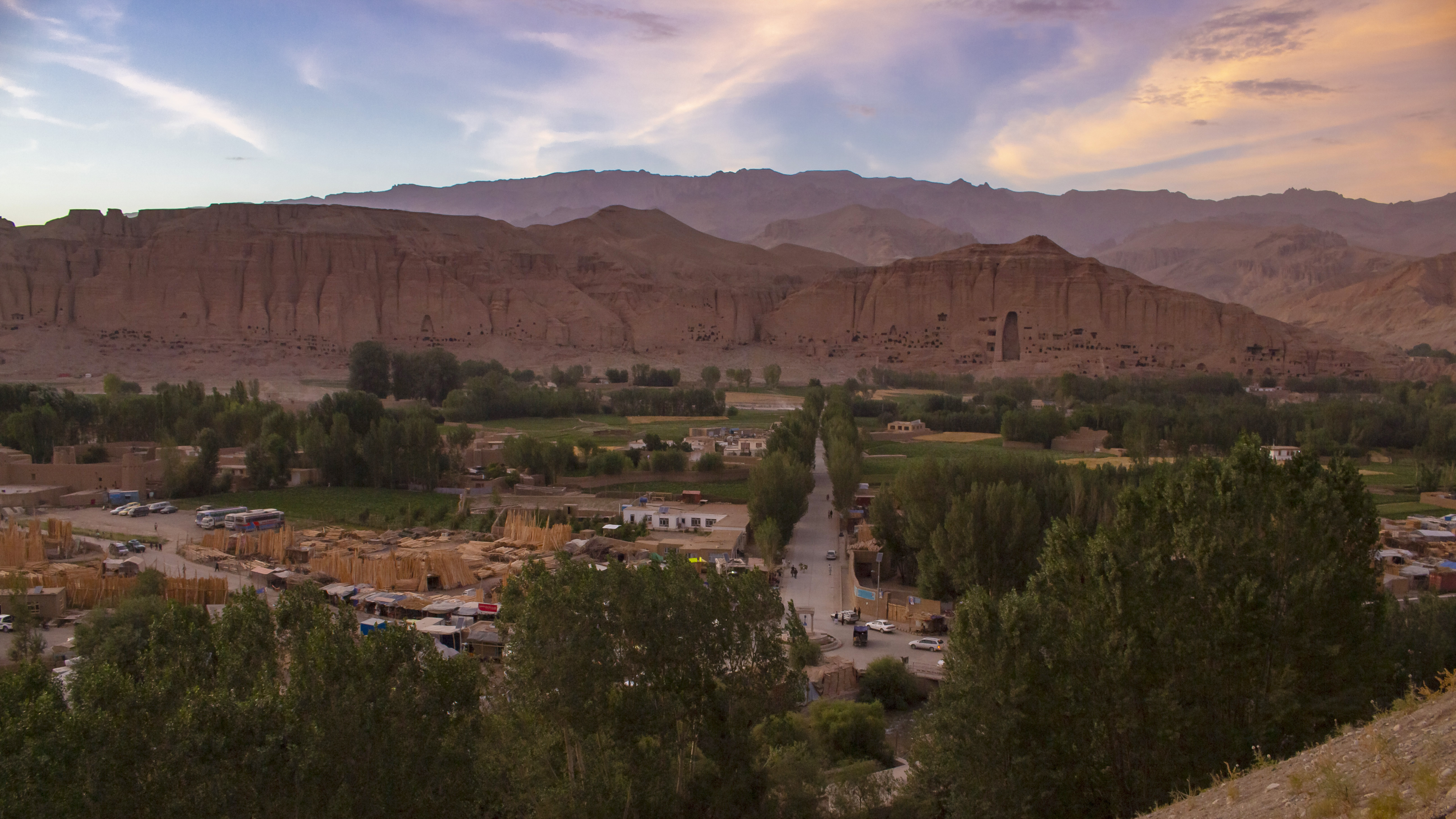
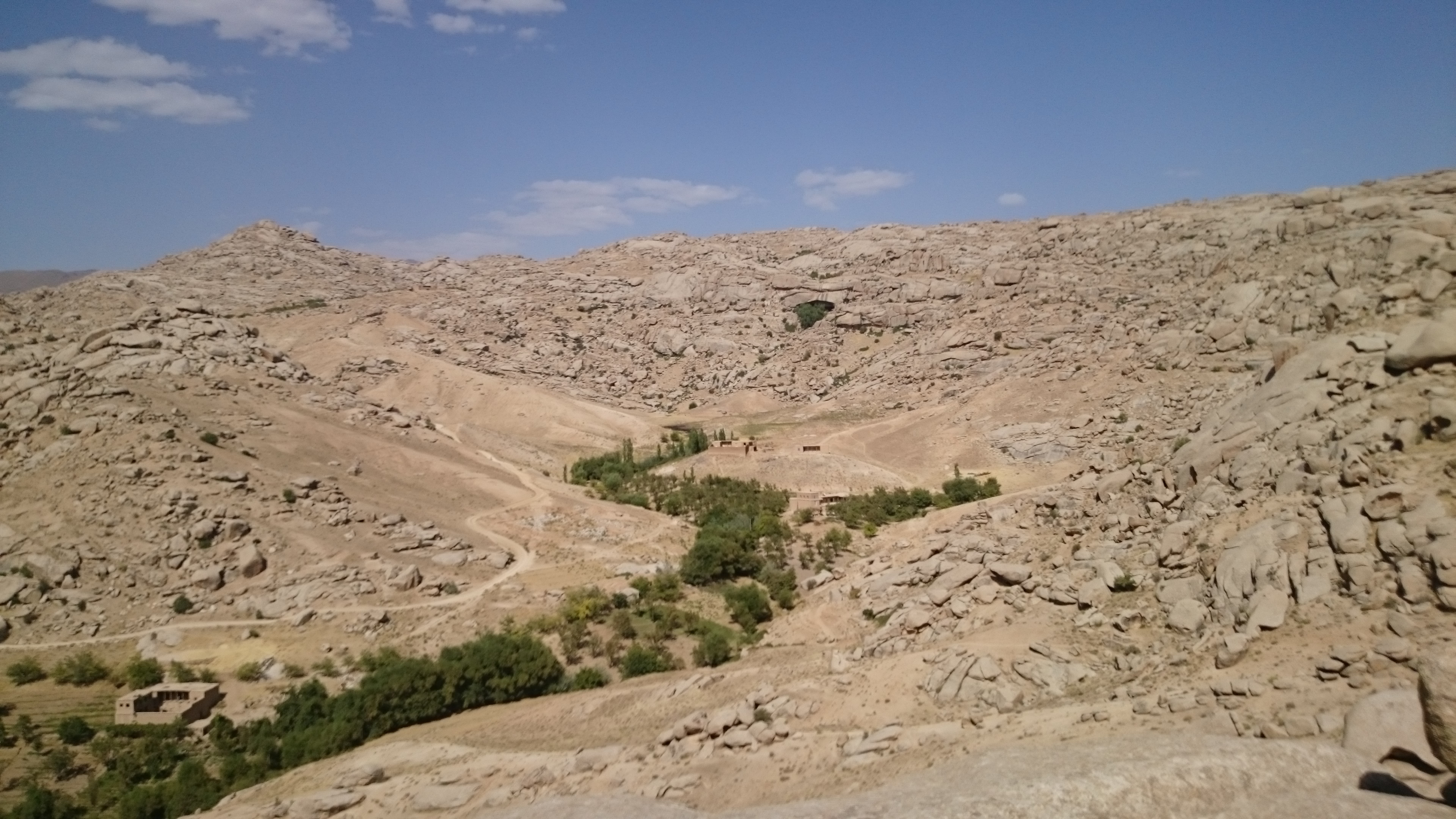
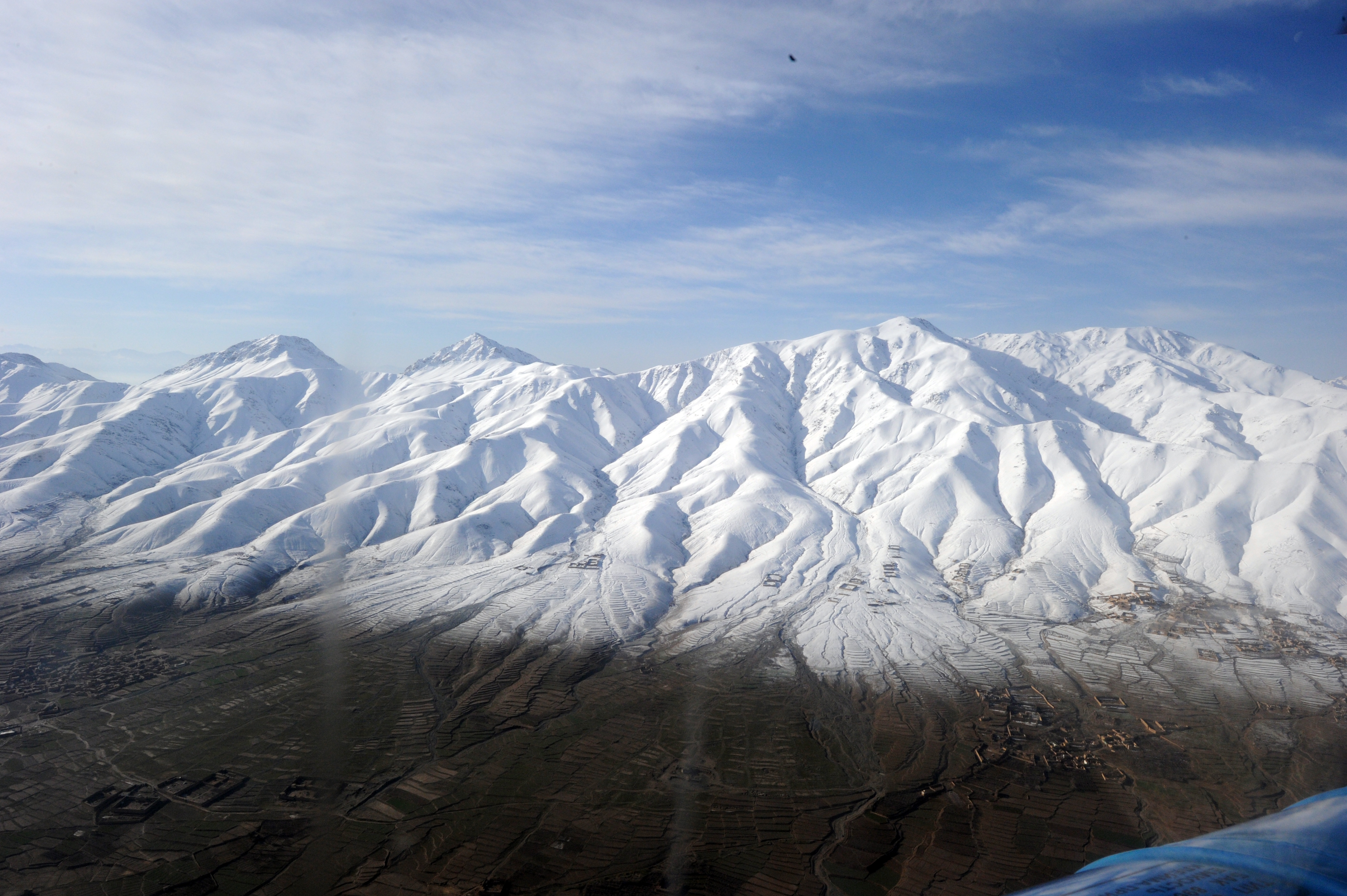
This section is a growing guide to the places that make up the Hazara world - geography, history, and the communities that call them home.
The 34 Provinces of Afghanistan
A visual overview of Afghanistan's administrative provinces - geography, location, and regional context.
Watch on YouTube →Know a place we should cover?
If you have photos, stories, or knowledge about a specific province or city - Hazara community presence, history, or cultural significance - we want to hear from you.
Get in touch →Go Deeper
عمیقتر بخوانید
The story here is real, documented, and ongoing. If you want to understand it more fully - the history, the culture, the current situation, the people who are living it and fighting for it - there is more to explore.
Browse our Stories section for in-depth articles, cultural features, and first-person narratives from the Hazara community around the world.
Explore Culture and Heritage - the language, the music, the festivals, the art, the traditions that have traveled with this people across centuries and continents.
And when you are ready, consider what you can do. The Get Involved page has options from sharing this page to sustained advocacy. Small actions multiply. The Hazara are not waiting to be saved. They are asking to be seen - and to have allies who understand what they are standing for.